The writing path
The Path
The programme was not designed and then executed. It was walked, and each book's central question was left open by the one before it.
Koinonia: A Phenomenology of Being-With (Volume 1 of the trilogy) begins with the most familiar and least examined thing there is: that before anyone speaks, one is already with others in a world held in common. Through figures rather than proofs — the withheld greeting, the failed greeting, the cat, the factor without access — it finds what lies beneath every shared world: the bare fact that persons can address one another and be held to answer. It calls this the floor, and draws from it one law, present in the corpus from its second chapter onward: the field constitutes, and only persons answer. The book ends at a door it chooses not to open.
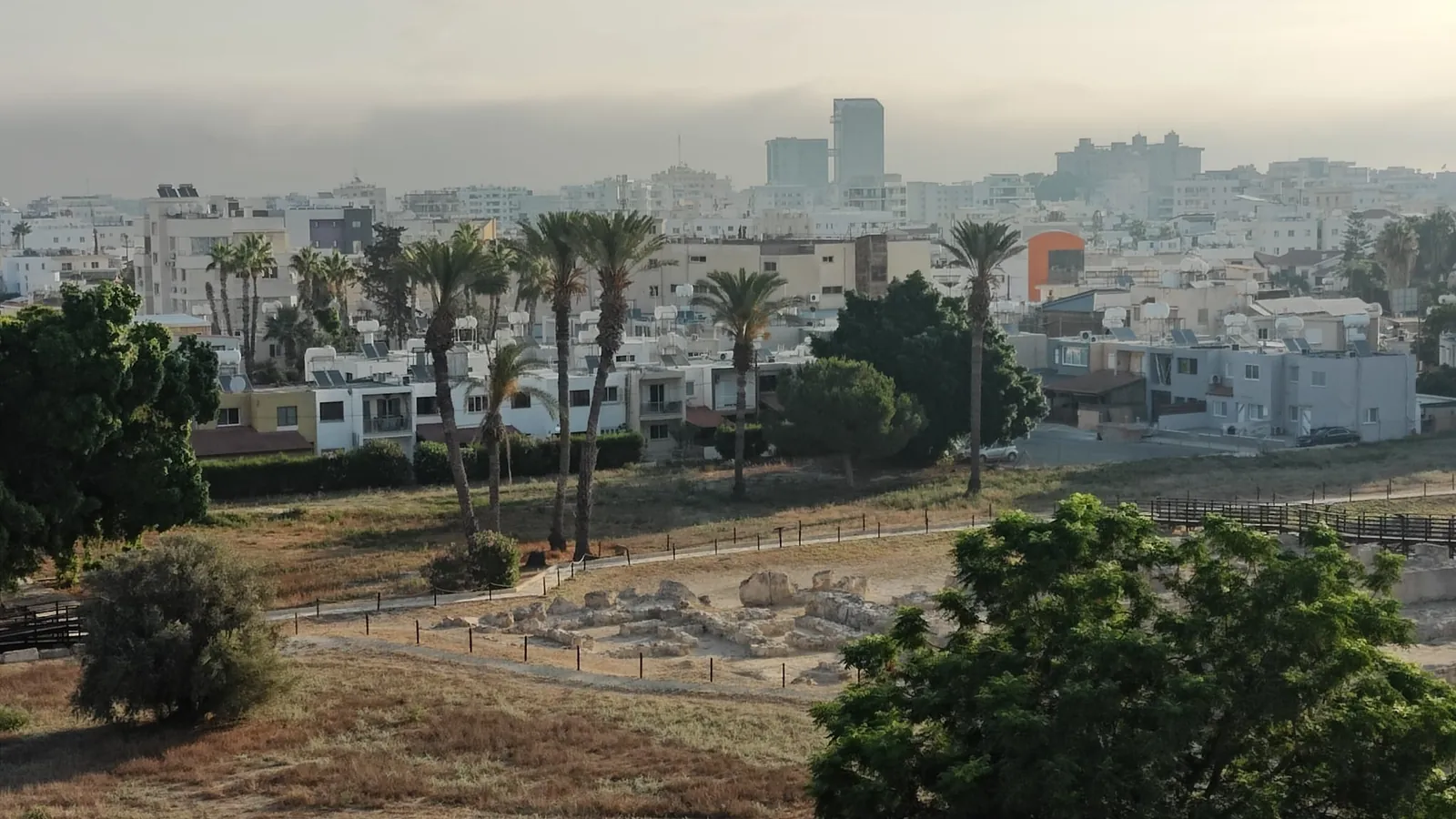
No Ground (Volume 2) opens the door. Beneath the floor, every age has posited a ground: nature, the gods, the order of things, the certain self, history. Two friends walk the towns of Cyprus — the excavation, the museum, the walls of Nicosia, the crossings, the north — and what they find is stated by the title: beneath the floor there is no ground, and there never was one. The finding is not despair; the book's coda is a first greeting, a child handed to a man in a boatyard in spring light. What holds people together was never held up by anything beneath them.
The Locus (Volume 3) asks the question that the removal of ground makes urgent: when something comes due — an address, a deed, a debt — where does the answer land, if nothing beneath us receives it? Through the lamp, the jar, the name called across a crowd, the counter, the grave, it locates the finite place where substitution runs out: the locus. Not a ground bearing from beneath; a place receiving from before.
Positive No-Ground: The Common and the Locus of Answerability joins what the trilogy reached separately into a single movement. The joining is the book's own contribution, not a restatement of the trilogy. Its result is the founding statement of the programme: positive no-ground. The common makes everything possible and finally answers for nothing; what remains when the ground is refused is not chaos but the precise structure of common possibility, address, and the answerable locus. One question is deliberately left open: when every role and history is peeled from the one at the locus, the peeling finds no kernel — and should find none. What, then, is the one who answers?
Ethical Ontology, Volume I: The Modal Coincidence answers it. The who is not a substance, bearer, bundle, narrative, or hidden object, but the coincidence of a manner and its obtaining as this one — modal coincidence. Ownness is the differentia of who: the whole modal coincidence obtains as someone rather than merely something; the category who articulates this ownness, and neither produces nor confers it. With this category, the path that began with a greeting on a morning walk becomes an ontology: positive, exact, and requiring no ground. The formal statement is given in The Calculus of Modal Coincidence (2026), and the determination is stated on its own in The Who as a Modal Category.
The figures never left. The greeting that opens Koinonia is the greeting analysed in Volume I; the child in the boatyard is the newborn of the substitution trial; the cat at the threshold walks through all five books. What was literature became evidence.
A second line of work runs beside this one. In Reading Between the Times, The Vectorized Afterlife of the They, Artificial Intelligence Doesn't Exist, and Socrates and the Machine — published through KiTalent Research — the same questions were pursued through language, temporality, and machine fluency: what a generated profile is, why a profile is not a person, and what judgment requires that fluency cannot supply. The two lines converge in the ontology: the machine's question returns as an open regional trial, and the profile-person distinction returns as the doctrine that the public who-form may carry access to a who without ever becoming one.
The path was walked in Cyprus, and the island is not scenery. A philosophy of no-ground and contested attribution was written in the one place in Europe where ground and attribution are visibly unsettled — and it is in Larnaca that the Institute for Ethical Ontology is being established.